
How to Make the Perfect Burger (My Chef-Tested Blueprint)
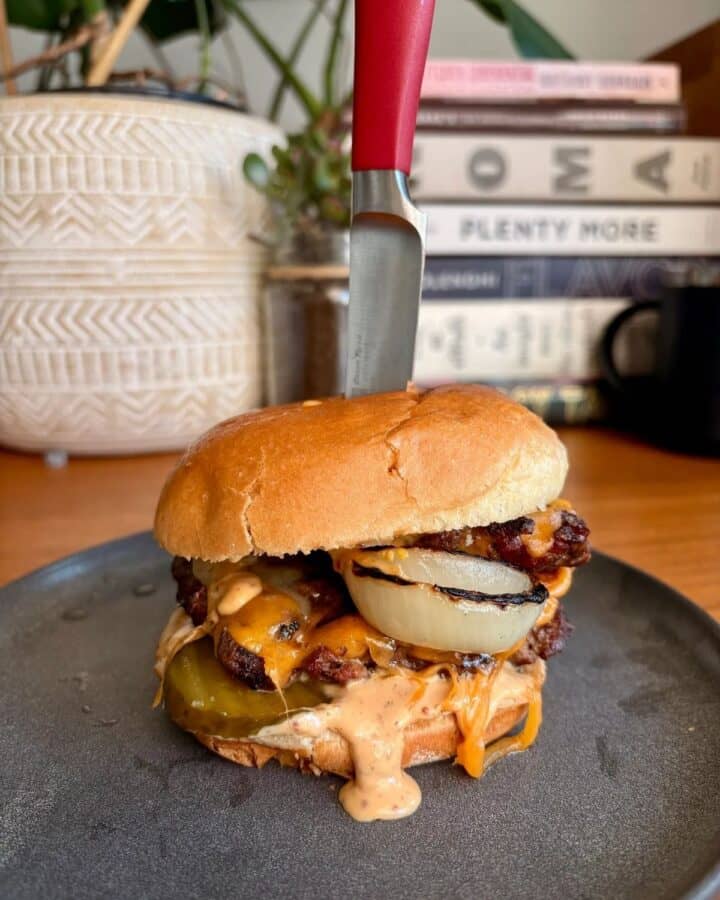
My no-fluff burger system for perfect crust, juicy centers, and toppings that actually make sense, showcased with the perfect French Onion Burger you can steal tonight.
Jump to:
In my world, good burgers are simple.
They have a few strong ingredients, like a really good sauce, and absolutely no filler. And definitely no “groceries” stacked on top pretending to be flavor.
Hot take: I don’t believe in lettuce, tomato, or raw onion on a burger. That’s a salad! When I’m building a burger, I want the gooey, rich, warm, melty part to win. I’m not chasing freshness or lightness. I’m chasing indulgence.
I’ve cooked burgers thousands of times.On TV, for celebrities. I’ve built thick steakhouse-style burgers, smashed diner patties, sliders for events, burger spirals, burger spring rolls, potato waffle burgers, and everything in between.
After twenty years cooking burgers professionally (and another ten before that cooking burgers for my burger-obsessed self), I don’t wing burgers anymore. I follow a system.
I call it the Burger Blueprint. It’s how I guarantee crust, juiciness, and toppings that actually work together instead of fighting each other.
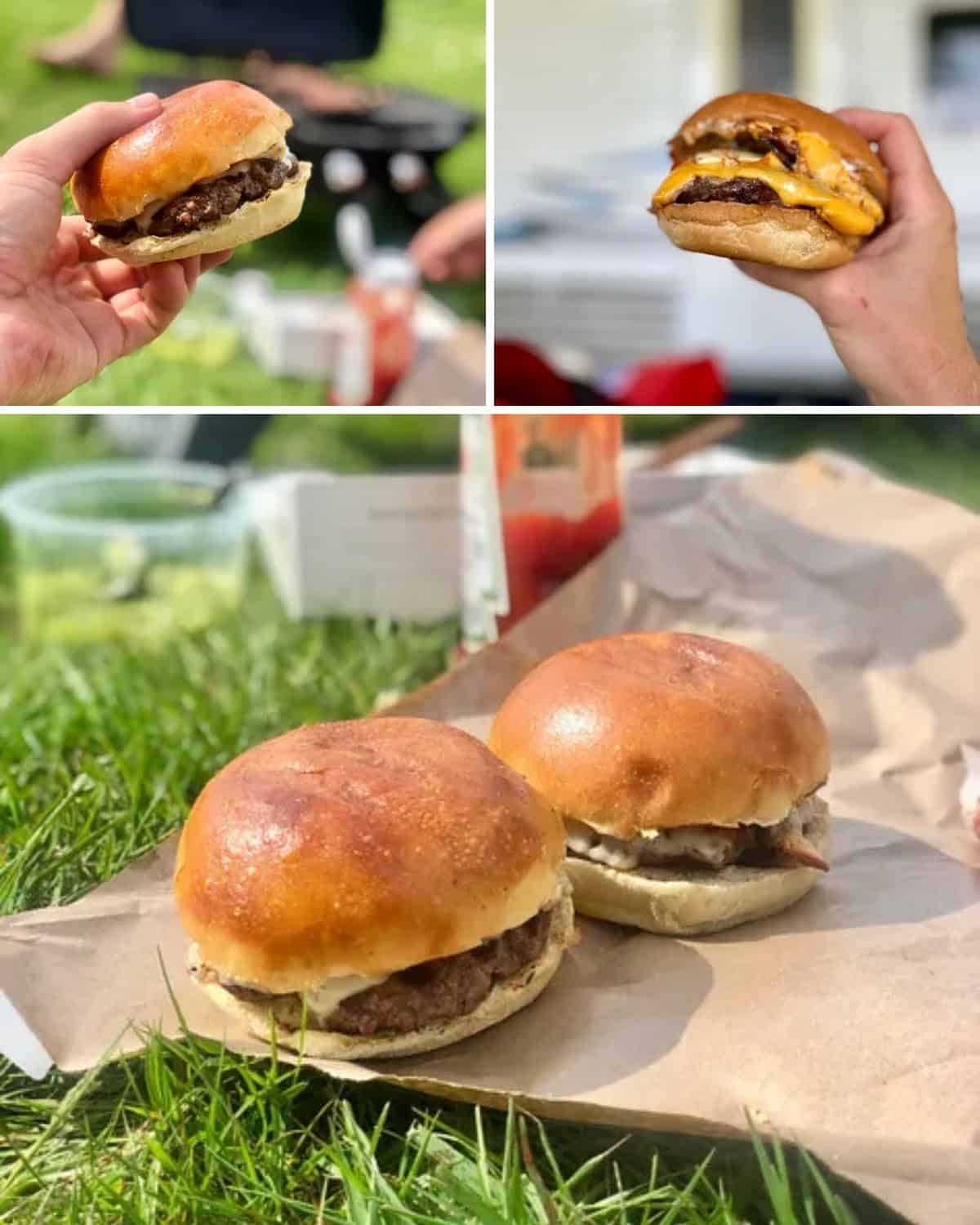
Today I’m giving you the Blueprint. It's how to make the perfect burger every single time. And to prove it works, I’m walking you through the French Onion burger I rely on when I want a thick, classic American-style burger with just enough twist to make it interesting.
This is my system. 👇 Steal it!
Why I This Burger Blueprint Works
Most mediocre burgers fail for predictable reasons. They’re under-seasoned, over-handled, cooked at the wrong temperature, or overloaded with toppings that water everything down.
The Blueprint fixes that.
It controls:
- Patty size and thickness
- When salt hits the meat
- Heat level and cooking method
- Moisture management
- Topping restraint
Once you understand those levers, you can build almost any burger variation without guessing.
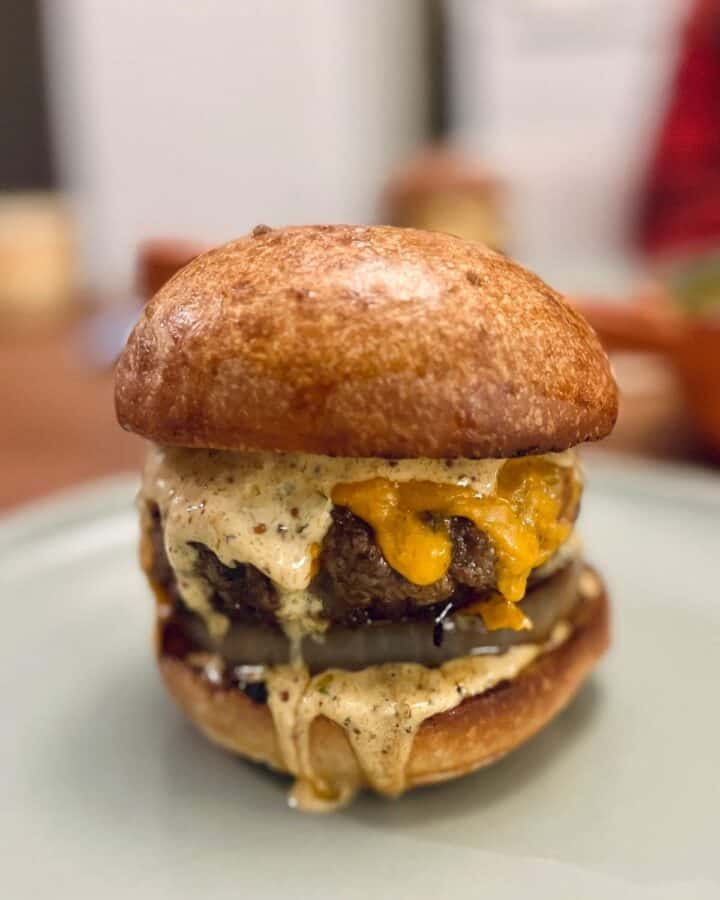
My Burger Blueprint
1. Patty Size
For thick, American-style burgers, I shape 6 ounces of ground beef into patties. Just under half a pound. That’s the sweet spot. Big enough to stay juicy, not so big it turns into a meatball.
For smash burgers, I roll 3-ounce balls. Smaller means more crust. And crust is the whole point of smashing.
2. The Salt Rule (Do Not Break This)
I season with salt. Only salt. And I do it seconds before the meat hits the heat.
Seriously. ONLY seconds before.
If you salt too early, the salt starts pulling moisture out of the beef, and moisture is the enemy of crust. You want that patty freshly salted and immediately introduced to high heat.
If you want pepper? Add it after cooking. Pepper burns.
3. Two Cooking Methods I Actually Use
Thick American Style
Heat your grill or cast-iron pan to medium-high.
Lay down that hand-formed, freshly salted patty and sear for 3–4 minutes.
Flip it, then immediately add the cheese so it melts while the second side cooks.
Let it sear another 3-4 mins on that second side.
Doneness check: Press on the center of the burger. Soft with bounce means its cooked medium. Firm means its cooked through. No need to cut into the meat and lose juices! Never. Cut. The. Meat.
Smash Style
Fan on, windows open, smoke alarm off! 😉
Get a cast iron pan screaming hot (high heat).
Throw that (recently salted) 3oz ball of beef onto it, pop a square of parchment on top of the ball, and press hard to smash the meat into the pan.
Go 3 minutes on the first side, then flip, add cheese if desired, and go 2 minutes more. This is how we get that crave factor crust.
No need to “check” for doneness here, the patties are so thin you can trust they’ll be cooked.
4. Topping Philosophy
I do not put salsa or avocado on my burgers. That’s burrito territory.
I focus on warm, cohesive toppings that melt into the patty rather than fight it. Cheese, caramelized onions, bold sauces, and buns that can handle the structure.
If you need sauce inspiration, my punchy burger sauce and garlic Dijon yogurt sauce both fit inside this Blueprint beautifully.
The Burger Blueprint in Action
My girlfriend loves a thick, American-style burger, so I'm sharing the recipe I use over and over again when burgers are on the menu at our house . We keep the 6-ounce patty. We follow the salt rule. We used the thick cooking method. Then, we layer on:
- A thick slab of onion, char-grilled until smoky and sweet
- Aged cheddar that melts as right after that flip
- A creamy, tangy sauce
- A soft brioche bun
The Blueprint stays the same. The flavor twist is what changes. You could swap in caramelized mushrooms. Blue cheese and bacon. Even something spicy with pickled heat. As long as the patty is right and the system is tight, the toppings become creative freedom instead of chaos.
Use the French Onion build below as your starting point. Then make it yours.
Recipe
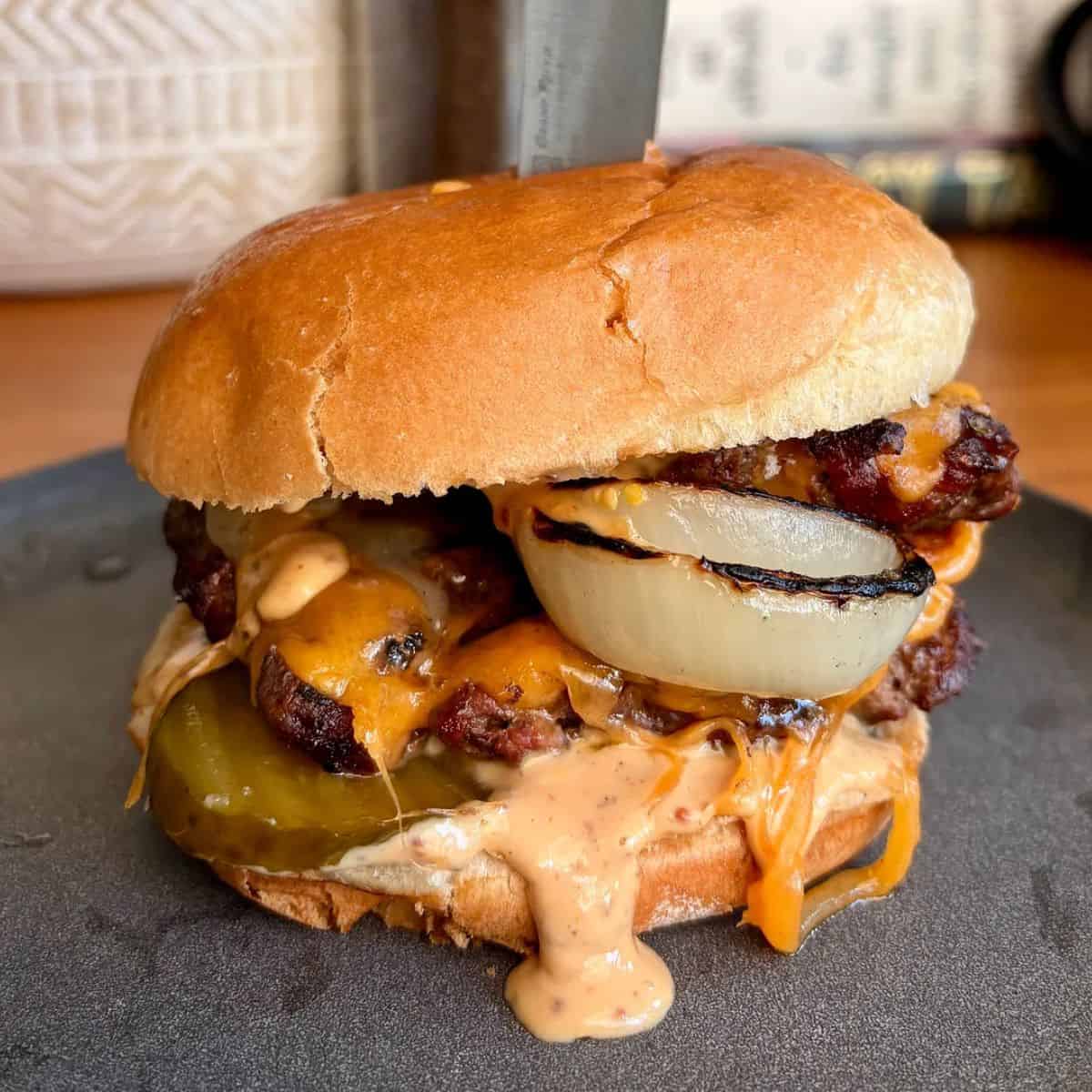
French Onion Burger (Built with the Burger Blueprint)
Ingredients
Method
- Shape: Form two 6-ounce patties from 12 ounces ground beef, handling lightly.
- Season: Sprinkle salt over both sides just before cooking.
- Sear: Cook patties over medium-high heat for 3 to 4 minutes per side, adding 1 slice cheddar to each burger after flipping.
- Char Onion: Grill or sear 2 thick onion slices until softened and caramelized.
- Toast: Lightly butter and toast 2 brioche buns.
- Assemble: Spread 1 tablespoon burger sauce on each bun, add the patty, top with onion, and close.
Notes
- Try not to overwork the beef. Loose shaping keeps it tender.
- If your onion slice is too thin, it won’t hold up. Go thicker than you think.
- Let the burger rest a minute before stacking. It keeps the bun from getting soggy.
- This Blueprint works for backyard grilling just as well as cast iron indoors.
Nutrition
Tried this recipe?
Let us know how it was!Frequently Asked Questions about the French Onion Burger and the Burger Blue Print
Mixing salt into the meat early changes the texture and can make the burger denser. Salting the exterior right before cooking preserves juiciness and promotes crust development.
For classic burgers, they aren’t necessary. Good beef and proper heat control are enough. Adding binders changes the texture and pushes it closer to meatloaf.
I prefer 80/20 for thick burgers. It gives enough fat for moisture and crust without excessive flare-ups.
In my opinion, raw, watery toppings cool the burger and dilute the experience. Warm, cohesive elements enhance richness instead of competing with it.
More recipes you'll love
A few favorites I think you'll really enjoy next.

Sounds like the perfect burger and sauce!
I certainly think so! You'll have to try and let me know what you think. 🙂
What is burger sauce please
hi Gillian, you can check out my burger sauce recipe here -- and it's delicious!
Hi Gillian, my all-time favorite burger sauce recipe is here on the site: Punchy Burger Sauce recipe. Try it out...and let me know what you think!