

Crispy Spicy Salmon Rice Paper Tostadas
These are rice paper tostadas - puffed and fried until shatteringly crisp, with a jammy egg yolk cooked right into the center of each one. Topped with spicy marinated salmon, creamy avocado, cucumber, and chili crisp. Part sushi, part tostada, genuinely its own thing. Gluten free and built in under 30 minutes.
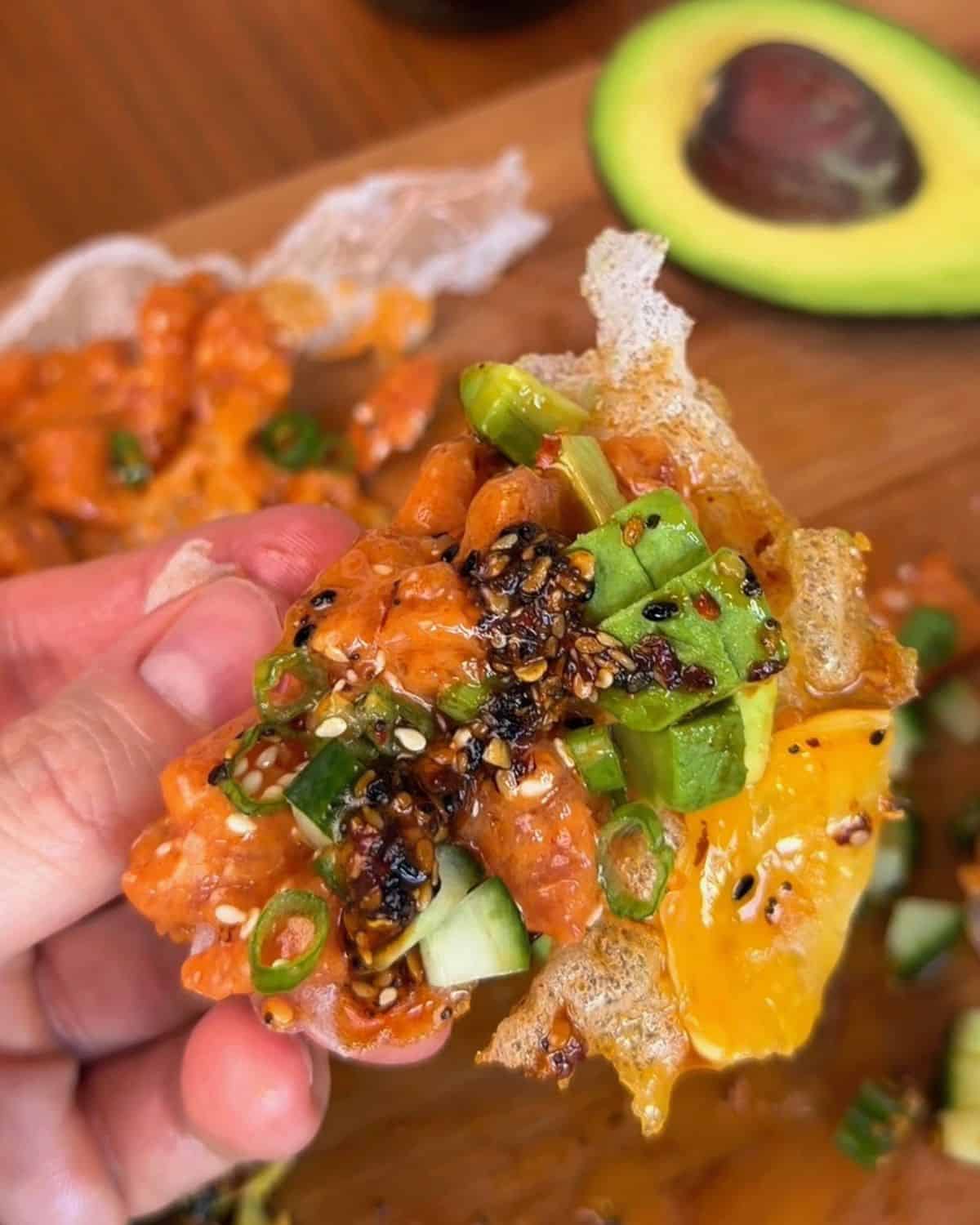
The idea of a tostada is simple: something crispy underneath, something delicious on top. The interesting question is what that crispy base can be. Corn tortillas are the classic answer. Rice paper fried in hot oil is a better one. It puffs in about 20 seconds, comes out lighter and crunchier than any tortilla, and happens to be completely gluten free.
The move here is cracking an egg yolk directly onto the center of the sheet before it hits the oil, so the yolk cooks gently as the rice paper puffs around it. What you end up with is a built-in sauce, right in the middle of your tostada.
The spicy salmon on top uses the same base as a classic spicy tuna roll - Japanese mayo, soy, sesame oil, a touch of heat - but with sushi-grade salmon finely diced and left to marinate for a few minutes so the flavors can settle. It's a mixture I come back to constantly, similar to what I use in my Crispy Rice Waffle with Spicy Salmon and Avocado and it works just as well here piled over a fried rice paper base as it does over a crispy waffle. The build is intentional. Spicy salmon on one half, diced avocado and cucumber on the other. Sliced green onion and sesame seeds over the salmon. Chili crisp drizzled over everything at the end, including over that jammy yolk in the center. You eat it immediately, before the rice paper has any chance to lose its crunch.
Jump to:
Why this recipe works
Hot oil makes rice paper puff through steam, not absorption.
When a dry rice paper sheet hits properly hot oil (just lightly smoking), moisture trapped inside the sheet instantly vaporizes and creates pressure that puffs the paper outward in seconds. The key word is dry - if the sheet has any moisture on it, it steams unevenly and won't puff uniformly. The oil needs to be hot enough that the whole process happens in 20 to 30 seconds. Any longer and the paper starts absorbing oil instead of puffing away from it.
The egg yolk cooks in the center by design.
Placing the yolk directly on the dry rice paper before lowering it into the oil means the yolk gets gentle, indirect heat from the oil surrounding it as the paper puffs. The whites from the yolk set just enough to hold it in place while the center stays jammy and rich. It's a technique that sounds precarious but is actually quite forgiving as long as the yolk stays centered and the oil is the right temperature.
Japanese mayo is the binding agent in spicy salmon.
The fat in Kewpie mayo coats every piece of diced salmon and holds the seasoning against the fish. It also adds a subtle richness and umami that regular mayo doesn't have - Kewpie is made with egg yolks only (no whites) and a touch of rice vinegar, which makes it richer and slightly tangier. The maple syrup in the marinade is a small addition that rounds out the heat and soy without making the mixture sweet.
Build order keeps the tostada crisp.
Loading the tostada while it's still hot helps, but the bigger factor is keeping wet ingredients away from the rice paper surface. The salmon goes on first and sits on top of the puffed structure rather than soaking into it. Avocado and cucumber go on the side. Everything gets eaten immediately. This is not a make-ahead plate.
"I love these are tostadas because they elevate brunch in a way I never thought I could at home. The spicy salmon marinade is delicious, we will use again and again!"
Rochelle (email subscriber)
Recipe

Crispy Spicy Salmon Rice Paper Tostadas
Watch:
Ingredients
Method
- Make the Spicy Salmon: Combine diced salmon, Japanese mayo, chili sauce, soy sauce, sesame oil, maple syrup, and sesame seeds in a bowl. Mix gently until fully coated. Let sit for 5 to 10 minutes to marinate. Set aside.
- Heat the Oil: Add enough neutral oil to a skillet to fully coat the bottom. Heat over medium-high until just lightly smoking. The oil temperature is critical here - if it's not hot enough, the rice paper will absorb oil instead of puffing.
- Add the Yolk : Carefully place one egg yolk directly in the center of a dry rice paper sheet.

- Fry the Rice Paper: Lower the sheet into the hot oil, yolk side up. The rice paper will puff rapidly around the yolk within 20 to 30 seconds. Cook until fully puffed and crisp with the yolk just set but still jammy. Transfer immediately to a paper towel-lined plate. Repeat with the second sheet and yolk.

- Build the Tostadas: Spoon spicy salmon over one half of each puffed rice paper. Pile diced avocado and cucumber into the remaining space. Top the salmon with sliced green onion and sesame seeds. Finish the whole tostada with a drizzle of chili crisp, including over the yolk in the center.

- Serve: Eat immediately while the rice paper is still aggressively crisp.

Notes
- Oil temperature is the one thing you can't rush here. The science behind it: when a dry rice paper sheet hits oil that's hot enough, the residual moisture inside the sheet instantly turns to steam and creates pressure that pushes outward, puffing the paper in seconds. If the oil is too cool, that process slows down and the paper starts absorbing oil instead - you end up with a greasy, flat sheet instead of a light, crispy one. A light wisp of smoke rising from the surface is your signal that it's ready.
- Keep the yolk centered before it goes in the oil. Once it's in the pan, don't touch it. The puffing happens fast and moving the sheet will break the yolk before it has a chance to set. Twenty to thirty seconds is all it takes. Pull it the moment the edges look fully puffed.
- Don't overload the tostadas. The puffed rice paper is crispy but not structural - too much weight and it collapses under the toppings. A generous spoonful of salmon, a pile of avocado and cucumber, and the drizzle on top is exactly the right amount. The chili crisp over the warm yolk in the center is the move that ties everything together. If you're into this kind of spicy salmon build, my [Crispy Rice Waffle with Spicy Salmon and Avocado] uses the same marinade over a completely different base and is worth having in your rotation too.
- Use sushi-grade salmon. This is raw fish that's being eaten raw, so the grade matters. Look for it at a Japanese grocery store or a fishmonger who explicitly labels it sushi-grade.
Nutrition
Tried this recipe?
Let me know how it was!Commonly questions about the Crispy Salmon Tostadas
Yes, and it works better than most people expect. A dry rice paper sheet dropped into properly hot oil puffs in about 20 to 30 seconds, coming out light, crispy, and significantly more delicate than a fried corn tortilla. The key is dry paper and hot enough oil - if either condition is off, the paper absorbs oil instead of puffing away from it. The result is naturally gluten free and genuinely bangin' as a base for anything you'd put on a tostada.
Finely dice sushi-grade salmon and mix it with Japanese mayo, soy sauce, sesame oil, chili sauce, and a small amount of maple syrup. Let it sit for 5 to 10 minutes so the marinade coats the fish evenly. The result is the same flavor profile as the spicy salmon roll from your favorite sushi spot, just in a format you can pile onto a crispy rice paper tostada.
Sushi-grade is a labeling term used by fishmongers and grocery stores to indicate that salmon has been handled and frozen in a way that makes it safe to eat raw. It's not an official regulatory term, but reputable fish counters use it to mean the fish has been frozen to a temperature that eliminates parasites. Look for it at Japanese grocery stores, Whole Foods fish counters, or any fishmonger who explicitly labels it. If you can't find it, opt for the freshest wild-caught salmon available and ask your fishmonger directly.
Eat it immediately. Unlike a tortilla tostada which holds up for a few minutes, puffed rice paper starts softening the moment moisture from the toppings makes contact with it. Build the tostada right before eating, keep wet ingredients (like the avocado) from sitting directly on the base for too long, and serve it while the paper is still hot from the oil.
A tostada is flat and open-faced - the toppings sit on top of a crispy base rather than being wrapped or folded. A taco uses a soft or hard shell that folds around the filling. Here the puffed rice paper acts as the tostada base, staying flat and open so you can load the salmon, avocado, and cucumber across the surface and eat it in sections rather than as a folded bite.
If you make this one, I want to see that yolk break the moment you pick it up. Tag me or leave a rating below!
More recipes I think you'll love
Into this one? I have lots more where it came from. Try a few of these next.


Zero stress recipe. Read through it once, followed along, done. My kind of cooking!