

Spicy Sesame Noodles with Chili Oil
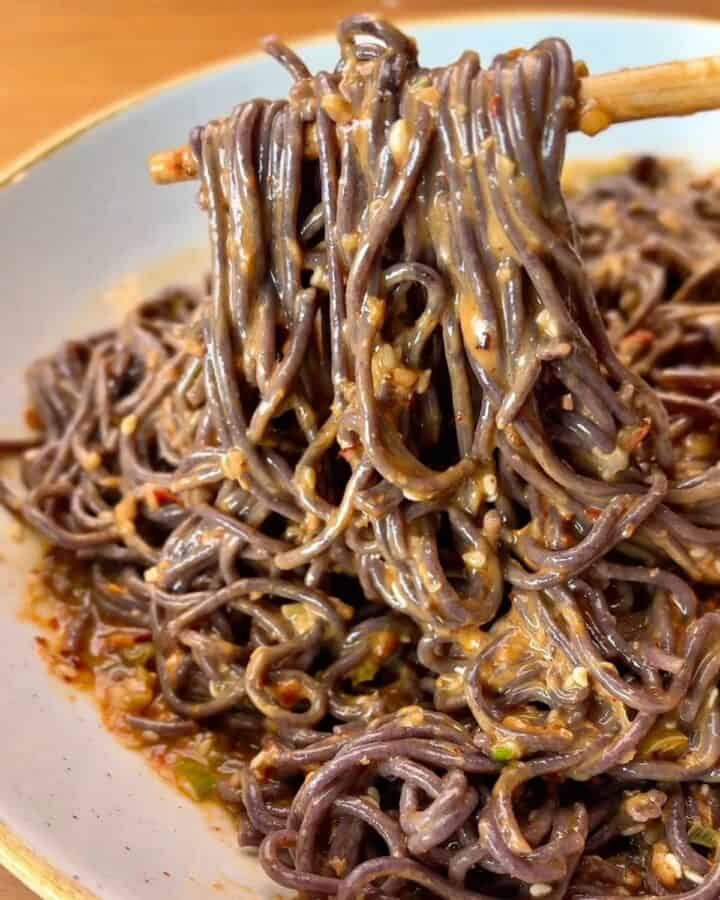
These spicy sesame noodles come together in 10 minutes with a chili oil sauce built from pantry staples. Garlic, ginger, nut butter, soy sauce, and lime poured over hot noodles and tossed until everything is glossy and deeply flavored. Fast food, made at home, no compromises.
Jump to:
The 10-Minute Noodles That Actually Deliver
I make these more than I'll admit. There's a version of this dish in almost every cuisine: noodles, an aromatic oil, something salty, something acidic, heat. The technique is nearly identical whether you're making dan dan noodles in Sichuan or aglio e olio in Rome. Hot oil bloomed over aromatics does in seconds what would take a sauce 20 minutes on the stove.
This version uses sesame oil heated until fragrant and poured directly over chili flakes, minced garlic, and ginger in a heatproof bowl. The heat from the oil blooms everything instantly. Nut butter goes in for richness and body, soy sauce for salt and umami, lime juice to cut through it all. The cooked noodles go in and get tossed until every strand is coated. That's it.
What Makes This Different from a Standard Sesame Noodle Dish
Most sesame noodle recipes use sesame paste or tahini as the primary fat. This one uses nut butter (peanut butter specifically if you want the richest result) combined with sesame oil rather than sesame paste alone. The difference is texture and depth. Peanut butter gives you more body and a slightly sweeter, nuttier base. The chili oil technique adds a heat that's built into the sauce rather than sitting on top of it.
If you love this style of fast, flavor-forward noodle dinner, my One-Pan Creamy Salmon Pasta and my Creamy One Pan Tomato Spinach Fettuccine follow the same principle of building maximum flavor with minimum time.
Why These Sesame Noodles Work
Hot Oil Blooming Is the Whole Technique
Pouring heated sesame oil over raw chili flakes, garlic, and ginger isn't just a shortcut - it's a deliberate cooking method. The hot oil flash-cooks the aromatics instantly, extracting their flavor compounds in seconds and infusing the oil with all of that heat, pungency, and depth. The result is a deeply flavored chili oil that took three minutes rather than the 20 to 30 minutes a slow-infused version would require. The heatproof bowl matters here. A regular bowl can crack from the thermal shock.
Nut Butter Adds Body Without Heaviness
Sesame paste or tahini is the classic choice for noodles like these. Peanut butter does something slightly different. It has more fat and a slightly sweeter flavor that rounds out the heat from the chili oil and the saltiness of the soy sauce. It also emulsifies into the sauce more easily than tahini, giving you a glossy, cohesive coating rather than a grainy or oily one. Any nut butter works. Almond butter gives you a milder, less sweet result if you want something more neutral.
Lime Juice Is the Balance Element
Without acid, this sauce tips heavy. The sesame oil is rich, the nut butter is rich, the soy sauce is salty. A squeeze of lime cuts through all of that and lifts the whole dish. It's the same role lemon plays in pasta aglio e olio or vinegar plays in a hot and sour dish. Don't skip it and don't substitute it with anything less bright. Fresh lime, not bottled.
Noodle Water Is Your Secret Weapon
If the sauce tightens up too much once the noodles go in, a splash of the starchy noodle cooking water loosens it immediately and helps it cling to the noodles more evenly. This is the same technique that makes pasta sauces glossy in Italian cooking. Save a small cup before draining and add it a tablespoon at a time until the consistency is right.
"This dish is seriously ready in 10 minutes! I never have energy to make dinner and this felt interesting AND easy. A win win."
- Jess (email subscriber)
Recipe

Spicy Sesame Noodles with Chili Oil
Ingredients
Method
- Cook the Noodles: Cook noodles according to package instructions. Reserve a small cup of cooking water before draining. Drain and set aside.
- Heat the Oil: Heat sesame oil in a small saucepan over medium heat for 3 to 4 minutes until fragrant and just beginning to shimmer.
- Build the Sauce: Add chili flakes, minced garlic, minced ginger, three-quarters of the green onions, and sesame seeds to a large heatproof bowl. Carefully pour the hot sesame oil over the mixture. It will sizzle immediately.
- Finish the Sauce: Stir in nut butter, soy sauce, and lime juice until smooth and fully combined.
- Toss and Serve: Add the cooked noodles to the bowl and toss well until every strand is coated. If the sauce is too thick, add a splash of reserved noodle water and toss again. Top with remaining green onions and extra sesame seeds. Serve immediately.
Notes
Nutrition
Tried this recipe?
Let me know how it was!Common questions about these Spicy Sesame Noodles
Sesame noodles are cooked noodles tossed in a sauce built around sesame oil or sesame paste, with soy sauce, garlic, and acid for balance. This version uses heated sesame oil poured over chili flakes and aromatics to create a quick chili oil base, then adds nut butter for richness and lime juice for brightness. The result is spicier and more complex than a standard cold sesame noodle dish.
Yes. This recipe uses peanut butter instead of sesame paste, which gives you more body and a slightly sweeter, nuttier flavor. The sesame flavor comes from the sesame oil and sesame seeds rather than paste. If you want a more traditional sesame noodle flavor, tahini is the closest substitute for sesame paste.
Ramen, udon, lo mein, and rice noodles all work well. Ramen is the fastest and most accessible. Udon gives you the chewiest result. Rice noodles make the dish gluten free. The sauce works with any noodle as long as you don't overcook them, slightly underdone is better since they continue softening in the warm sauce.
Yes, and they're excellent cold. The sauce tightens as it chills, so loosen it with a small splash of water or a few drops of sesame oil before serving. Cold sesame noodles are a classic format in their own right and make a great meal prep option since they hold well in the fridge for up to 3 days.
Reduce the chili flakes. Start with one tablespoon instead of two and taste before adding more. The heat also mellows as the noodles cool, so a dish that feels very spicy right out of the bowl will settle into a more manageable warmth after a few minutes. Adding more nut butter or a small drizzle of honey also rounds out the heat without significantly changing the flavor profile.
If you make these, I want to know how fast they disappeared! Leave a rating below or tag me, and save this one for the next time you need dinner on the table in 10 minutes and don't want to compromise on flavor.
More recipes you'll love
A few favorites I think you'll really enjoy next.


Made this after a long day of moving boxes and it was exactly the reward we needed. Came together so fast. Was absolutely delicious and so satisfying.